

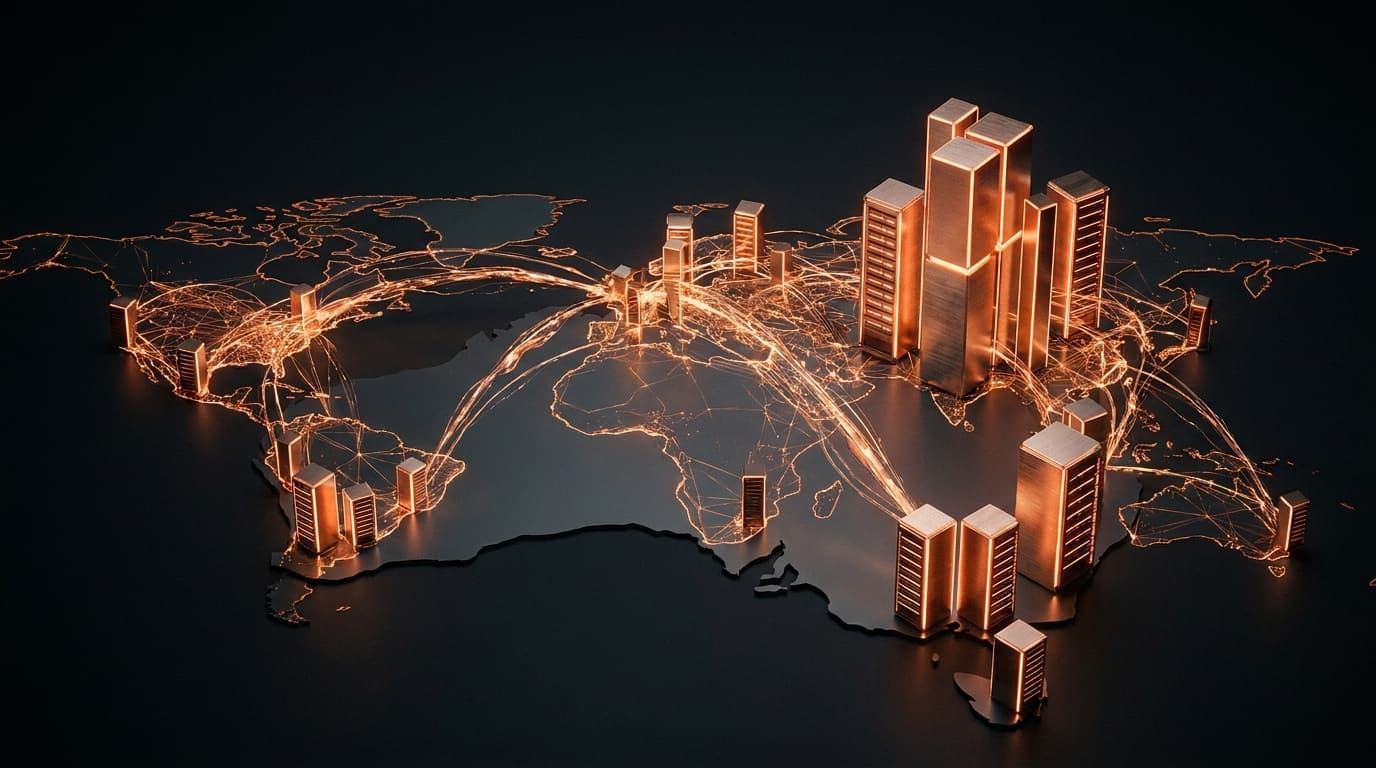
Microsoft CEO Satya Nadella stood alongside Prime Minister Anthony Albanese in Sydney last Wednesday and announced A$25 billion (US$18 billion) in new investment into Australia's digital infrastructure — the largest corporate commitment in Australian history. The money, to be deployed by the end of 2029, will expand Azure AI cloud capacity by more than 140%, fund training for three million Australians in workforce-ready AI skills, and deepen Microsoft's cybersecurity partnership with the Australian Signals Directorate.
This is not incremental. When you add Microsoft's commitment to AWS's A$20 billion pledge and OpenAI's A$7 billion deal, Australia is now absorbing more than A$52 billion in hyperscaler AI infrastructure investment. For a country that ranked second globally for data centre investment in 2024 according to Knight Frank, this cements a rapid transformation from AI consumer market to genuine infrastructure hub.
What Microsoft is actually building
The headline number — A$25 billion — covers capital and operational expenditure across three pillars.
Infrastructure. Microsoft will dramatically expand its Azure AI supercomputing footprint across its three Australian cloud regions in Sydney, Melbourne, and Canberra. The company grew from 20 to 29 data centre sites after its A$5 billion commitment in October 2023. This next phase targets a 140% capacity increase by end of 2029, deploying advanced AI processors to support the next generation of enterprise AI workloads.
Cybersecurity. The Microsoft-ASD Cyber Shield, established in 2023, will be extended to cover additional federal agencies. The programme has already secured more than 38,000 government accounts, identified 35 previously unknown vulnerabilities, and delivered a bespoke Microsoft Sentinel integration with the government's Cyber Threat Intelligence Sharing program. Microsoft will also deepen collaboration with the Department of Home Affairs on national resilience.
Skills. Microsoft committed to training three million Australians with workforce-ready AI skills by 2028. This builds on a previous one-million target, achieved ahead of schedule. New programmes include Elevate for Educators — a free AI skills programme for teachers — and a partnership with youth platform Anyway (formerly Year13) to bring AI-powered career coaching to up to 1,000 Australian schools.
The economic footprint is already substantial
An EY-Parthenon analysis commissioned by Microsoft found that across the 2025 financial year, Microsoft's Australian presence generated A$36 billion in total economic contribution and sustained the equivalent of more than 186,000 full-time jobs. Of that, A$11 billion came from Microsoft's direct operations, with A$25 billion flowing through its network of more than 10,000 local partner companies and 3.6 million customers.
The adoption numbers tell a striking story. Seventeen of Australia's ASX Top 20 companies — including all four major banks — are now using Microsoft 365 Copilot. Fifty-seven government agencies have deployed it. Among early Australian purchasers, Copilot seat counts have expanded by more than 560%.
Concrete enterprise examples are emerging. Telstra expanded a 300-person Copilot pilot to 21,000 employees, delivering one to two hours saved per week and a 15% lift in task completion. Westpac has rolled it out to 35,000 staff with governance frameworks that tie every AI initiative to measurable business outcomes. These aren't pilot programmes — they're full-scale production deployments from two of Australia's largest employers.
A$52 billion and counting: the hyperscaler race for Australia
Microsoft's investment doesn't exist in isolation. Australia has become the southern hemisphere's most contested battleground for AI infrastructure.
AWS committed A$20 billion in July 2025 to expand its Australian digital infrastructure by 2029. OpenAI followed with A$7 billion in December. In March, Anthropic CEO Dario Amodei met with Albanese to sign a memorandum of understanding on AI safety research, calling Australia "a natural partner for responsible AI development."
eToro analyst Josh Gilbert called Microsoft's move "a serious vote of confidence in Australia as a tier-one AI market" — but noted it's also a defensive play to lock in enterprise customers while the competitive landscape remains wide open. Business Council of Australia CEO Bran Black was more emphatic, calling it "a global game-changer for Australia."
The labour market is already responding. SEEK reports that AI-related job advertisements have risen 75% year-on-year as of March 2026, and are now nearly three times their 2019 levels. This aligns with CSIRO research showing that firms adopting AI are hiring 36% more workers than non-adopters — AI infrastructure creates jobs, it doesn't just automate them away.
The sovereign AI question nobody is answering
Not everyone is celebrating unconditionally. The Australian Computer Society has warned that relying exclusively on foreign hyperscalers risks making Australia a "permanent customer" rather than a builder — vulnerable to offshore policy shifts, price shocks, and opaque systems. The ACS argues Australia needs to co-invest A$2 billion to A$4 billion in sovereign-grade infrastructure, including locally owned data centres, domestic cloud platforms, and sector-specific AI models.
This is a legitimate concern. A$52 billion in foreign investment is extraordinary, but the question of how much value stays onshore is harder to answer. Microsoft signed a memorandum of understanding committing to the government's new expectations for data centre developers — covering clean energy, sustainable water use, local jobs, and national security — but these are expectations, not regulations. The Sydney Morning Herald noted that key details on specific job creation numbers and the proportion of capital remaining in the local economy are still missing.
What this means if you run a business in Australia
For the audience that matters to us at Heygentic — business owners running 10 to 100 person operations — the practical implications are significant.
More AI capacity, locally. A 140% expansion in Azure AI infrastructure means more compute available in-country, with lower latency and stronger data residency guarantees. If you've been running AI workloads through offshore regions, the calculus changes.
The skills pipeline is real. Three million people trained in AI skills by 2028 means the talent pool for hiring AI-literate staff expands dramatically. Microsoft's partnership with MYOB to embed AI into accounting tools is an early example of what this looks like in practice — AI arriving inside the software you already use, not as a separate tool to learn.
Competitive pressure is building. When Telstra saves two hours per employee per week across 21,000 staff, that's the equivalent of adding 1,000 full-time workers to productivity. Your larger competitors are deploying these tools now. The window to adopt without falling behind is narrowing.
What to watch
Three things will determine whether this investment delivers on its promise. First, whether the government converts its memorandums of understanding into binding standards — particularly around local economic benefit and energy sustainability. Second, whether the sovereign AI gap gets addressed: A$52 billion in foreign infrastructure alongside zero investment in Australian-owned AI platforms is a strategic imbalance. Third, whether the skills commitment translates into genuine capability, not just certificate counts — the difference between someone who completed a Copilot tutorial and someone who can redesign a business process around AI is enormous.
Microsoft's A$25 billion bet says something important: the global AI infrastructure race has reached Australia, and the hyperscalers are treating this market as strategically critical. For Australian businesses, the infrastructure is coming whether you're ready or not. The question is whether you'll be positioned to use it.
Sources
- Microsoft deepens commitment to Australia with A$25 billion investment — Microsoft Source Asia
- Microsoft expands AI footprint in Australia with $18 billion investment — CNBC
- Microsoft bets big on AI in Australia with $18 billion investment — Reuters
- Seizing Australia's AI opportunity: EY-Parthenon Economic Impact Report — Microsoft Source Asia
- The SEEK AI Gauge — AI skills demand data — SEEK
- Sovereign AI infrastructure needs $2B to $4B in investment — InnovationAus
- Microsoft unveils $25B AI splurge in Australia but key details missing — The Sydney Morning Herald
